
Abbiamo raccolto per voi fonti bibliografiche in modo da rendere più facile l’approccio allo studio delle dinamiche del cyberspace per approfondire la vostra conoscenza. La sezione bibliografia è divisa in due settori: testi fondamentali (per lo studio delle materie della cybersecurity, cyberwar, cyber Intelligence e principi di diritto per il cyberspace); fonti essenziali (divise per ogni categoria attinente al mondo cyber). Questo, per garantirvi un accesso diretto alla Cyber Security and International Relations Studies.
Bibliografia Fondamentale
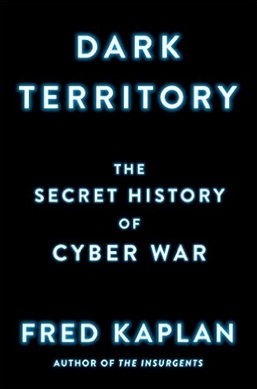
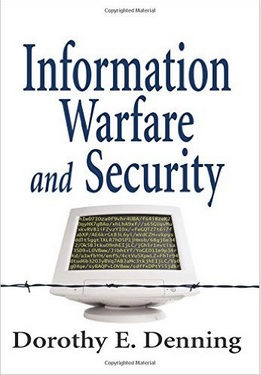
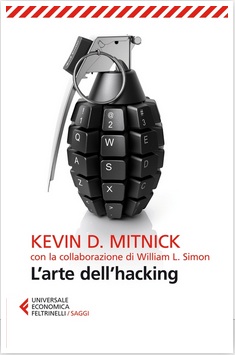
Bibliografia Suggerita
Cybersecurity
monografie
- AA. VV., Information Warfare. Le nuove minacce provenienti dal cyberspazio alla sicurezza nazionale italiana, a cura di Umberto Gori e Luigi Sergio Germani, FrancoAngeli, Milano, 2011.
- AA. VV., Modelling Cyber Security: Approaches, Methodology, Strategies, Gori Umberto (ed.), IOS Press, Amsterdam, 2009.
- AA.VV., Information Warfare 2011. La sfida della Cyber Intelligence al sistema Italia: dalla sicurezza delle imprese alla sicurezza nazionale, a cura di Umberto Gori e Luigi Sergio Germani, FrancoAngeli, Milano, 2012.
- Jean Carlo, Savona Paolo, Intelligence Economica. Il ciclo dell’informazione nell’era della globalizzazione, Rubbettino Editore, Soveria Mannelli, 2011.
- Stallings, William (2002). Cryptography and Network Security: Principles and Practice. Pearson Education.
- Deibert, R., J. Palfrey, R. Rohozinski en J. Zittrain (2011, eds.) Access contested. Security, identity, and resistance in Asian cyberspace, Cambridge (Mass.): MIT Press.
- AA. VV., Networks and Netwars. The Future of Terror, Crime, and Militancy, edited by John Arquilla and David Ronfeldt, RAND Corporation, Santa Monica, 2001.
Articoli e saggi
- Ablon, L., M. Libicki and A. Golay (2014) “Markets for cybercrime tools and stolen data. hackers’ bazaar”, RAND National Security Research Division, Santa Monica: RAND.
- Boyle R., “DARPA Looking to Reinvent Network Security, With Inspiration from Adaptive Biological Systems”, Popular Science, August 2010.
- Dunn Cavelty Myriam, “The Militarisation of Cyber Security as a Source of Global Tension”, The Center for Security Studies (CSS), 2012.
- Goolsby Rebecca, “On Cybersecurity, Crowdsourcing, and Social Cyber-Attack”, Wilson Center, Washington, 2010.
- Stall Terrier Sacha, “The Future of Cybersecurity, Centre For Strategic Studies”, The Hague, 2011.
- Singer P.W. “Corporate Warriors The Rise of the Privatized Military Industry and Its Ramiacations for International Security”,International Security, Vol. 26, No. 3 (Winter 2001/02), pp. 186–220.
- Clemente Dave, “Cyber Security and Global Interdependence: What Is Critical?”, A Chatham House Report, February 2013.
- Brito, J. and T. Watkins (2011) ‘Loving the cyber bomb? The dangers of threat inflation in cyber security policy’, Harvard National Security Journal, 3 (1): 41-84.
- Broeders, D. (2014) “Investigating the place and role of the armed forces in Dutch cyber security governance”, Breda: The Netherlands Defence Academy.
- Council on Foreign Relations (2013) “Defending an open, global, secure and resilient internet”, New York: Council on Foreign Relations.
- Dunn Cavelty, M. (2013) ‘From Cyber-bombs to political fallout: Threat representations with an impact in the cyber-security discourse’, International Studies Review, 15 (1): 105-122.
- Dunn Cavelty, M. (2014) ‘Breaking the cyber-security dilemma: Aligning security needs and removing vulnerabilities’, Science and Engineering Ethics, 20 (3): 701-715.
- Eeten, M. van, and M. Mueller (2013) ‘Where is the governance in Internet governance?’, New Media & Society, 15 (5): 720-736.
- Hansen, L. and H. Nissenbaum (2009) ‘Digital disaster, cyber security and the Copenhagen School’, International Studies Quarterly, 53: 1155-1175.
- Hoboken J. van, and I. Rubinstein (2014) ‘Privacy and security in the cloud: Some realism about technical solutions to transnational surveillance in the post-Snowden era’, Maine Law Review, 66 (2): 487-534.
- Stockton, P. en M. Golabek-Goldman (2013) ‘Curbing the market for cyber weapons’, Yale Law and Policy Review, 32 (1): 101-128.
Abbiamo circa altri 200 documenti tra articoli, saggi e volumi sul tema della cybersecurity da consigliarti! Clicca qui per mandare subito una mail e ricevere la nostra bibliografia completa.
Cyberspace
Monografie
- AA.VV., Information Warfare 2012. Armi cibernetiche e processo decisionale, a cura di Umberto Gori e Serena Lisi, FrancoAngeli, Milano, 2013.
- Clancy Tom, Net Force, Necto Partners, 1998, trad. it. a cura di Michele Foschini, Rizzoli, Milano, 2010.
- Floridi Luciano, Information. A Very Short Introduction, trad.it. La rivoluzione dell’informazione, a cura di Massimo Durante, Codice Edizioni, Torino, 2012.
- Lévy Pierre, Qu’est-ce que le virtuel?, 1995, trad. it. Il virtuale, a cura di Maria Colò e Maddalena Di Sopra, Raffaello Cortina Editore, Milano, 1997.
- Valeriani Augusto, Twitter factor. Come i nuovi media cambiano la politica internazionale, laterza, Roma-Bari, 2011.
- Deibert, R., J. Palfrey, R. Rohozinski en J. Zittrain (2008, eds.) Access denied: The practice and policy of global internet filtering, Cambridge (Mass.): MIT Press.
Articoli e Saggi
- Albright D., Brannan P., “The New National Intelligence Estimate on Iran: A Step in the Right Direction”, Isis Report, Washington, March, 2012.
- Keohane R.O., Nye Jr J.S., “Power and Interdependence in the Information Age”, Foreign Affairs, Vol. 77, No. 5 September-October1998, pp. 81-94.
- Krepinevich Andrew F., “Cavalry to Computer: The Pattern of Military Revolutions”, The National Interest, No. 37, Fall 1994.
- Libicki Martin C., “Brandishing Cyberattack Capabilities” 2013 RAND Corporation.
- Libicki Martin C., “Cyberspace Is Not a Warfighting Domain”, I/S: A Journal of Law and Policy for the Information Society, pp. 321-336.
- Lynn III W.J., “Defending a New Domain”, Foreign Affairs, September 2010.
- Peterson S., “Downed US drone: How Iran caught the ‘beast’”, The Christian Science Monitor, December, 2011.
- Rid Thomas, Mc Burney Peter, “Cyber Weapons”, in Rusi Journal, February/March 2012, vol. 157, n. 1, pp.6- 13.
- Stewart P., Wolf J., “Agent.btz Worm Won’t Die After 2008 Attack On Military”, Reuters, June, 2011.
- Saporito Laura, Lewis James A., “Cyber Incidents Attributed to China”, Center for Strategic and International Studies, Washington, 2012.
- Louise Arimatsu, “A Treaty for Governing Cyber-Weapons: Potential Benefits and Practical Limitations”, NATO CCD COE Publications, Tallinn, 2012.
- Rendina Federico, “Le nanotecnologie al servizio dei soldati del futuro”, Il Sole24ore, 15 Febbraio 2010.
- Waxman Matthew C., “Self-defensive Force against Cyber Attacks: Legal, Strategic and Political Dimensions”, Volume 89, U.S. Naval War College, 2013.
- Carter Jerry, Taylor Fred, “Cyberspace Superiority: An Analysis of the Department of Defense’s Ability to Achieve Superiority in Cyberspace”, Harvard University, 2011.
- Meyers David, “Why did President Obama destroy plausible deniability on cyber warfare?”, The Daily Caller, 06/11/2012.
- Barzashka Ivanka, “Are Cyber-Weapons Effective?”, The RUSI Journal, 158:2, pp. 48-56, April 2013.
- AIV (2014) “The Internet. A Global Free Space With Limited State Control”, The Hague: Advisory Council on International Affairs.
- Broeders, D. (2015) “The public core of the internet. An international agenda for internet governance”. Amsterdam: Amsterdam University Press.
- Chander, A. and U. Le (2015) ‘Breaking the Web: Data localization vs. the global internet’, Emory Law Journal. Vol. 64: 677-730.
- DeNardis, L. (2012) ‘Hidden levers of internet control. An infrastructure-based theory of internet governance’, Information, Communication and Society, 15 (5): 720-738.
- DeNardis, L. (2013) “Internet points of control as global governance”, CIGI Internet Governance Papers nr. 2 (August 2013).
- DeNardis, L. (2014) “The global war for internet governance”, New Haven: Yale University Press.
- Dunn Cavelty, M. (2012) ‘The militarisation of cyberspace: Why less may be better’, pp. 141-153 in C. Czossceck, R. Ottis en K. Ziolkowski (eds.) 2012 4th International Conference on Cyber Conflict, Tallinn: NATO CCDCOE Publications.
Abbiamo circa altri 150 documenti tra articoli, saggi e volumi sul cyberspace da consigliarti! Clicca qui per mandare subito una mail e ricevere la nostra bibliografia completa.
Cyber Strategy
Monografie
- AA. VV., Makers of Modern Strategy, edited by Peter Paret 1986, trad. it. Guerra e strategia nell’età contemporanea, a cura di Nicola Labanca, Casa Editrice Marietti, Genova-Milano, 1992.
- AA. VV., Strategy in the Contemporary World. An Introduction to Strategic Studies, edited by John Baylis, James J. Wirtz, and Colin S. Gray, Oxford University Press, Oxford, 2010.
- Agus Fausto, Nuove tecnologie al servizio della strategia, Editrice ZONA, Civitella in Val di Chiana, 2011.
- Choucri Nazli, Cyberpolitics in International Relations, The MIT Press Cambridge, Massachusetts, 2012.
- Di Nolfo Ennio, Dagli imperi militari agli imperi tecnologici. La politica internazionale dal XX secolo a oggi, Laterza, Roma-Bari, 2007.
- Giacomello Giampiero, Badialetti Gianmarco, Manuale di studi strategici. Da Sun Tzu alle ‘nuove guerre’, Vita e Pensiero, Milano, 2009.
- Jean Carl, Geopolitica, sicurezza e strategia, FrancoAngeli, Milano, 2007.
- Jean Carlo, Geopolitica del XXI secolo, Laterza, Roma-Bari, 2004.
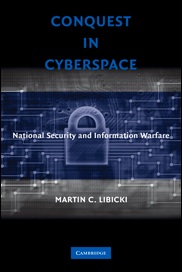
- Libicki C. Martin, Cyberdeterrence and Cyberwar, RAND Corporation, Santa Monica, 2009.
articoli e saggi
- AA.VV., “Contested Commons: The Future of American Power in a Multipolar World”, Edited by Abraham M. Denmark and Dr. James Mulvenon Center for a New American Security, Washington, January 2010.
- Echevarria II Antulio J., “Clausewitz’s Center of Gravity: Changing our Warfighting Doctrine – Again!”, Carlisle, Pennsylvania,Strategic Studies Institute, September 2002.
- Posen B., “Command of the Commons: The Military Foundation of U.S. Hegemony”, International Security, volume 28, issue 1, pages 5-46, Summer 2003.
- Sterner Eric, “Retaliatory Deterrence in Cyberspace”, Strategic Studies Quarterly, Spring 2011, pp. 62-80.
- Lin, H. (2012) ‘Thoughts on threat assessment in cyberspace’, I/S: A Journal of Law and Policy for the Information Society, 8 (2): 337-355.
- Dunlap Charles J., Jr., “Perspectives for Cyber Strategists on Law for Cyberwar”, Strategic Studies Quarterly 5, no. 1 (Spring 2011).
- Gray Colin S., “Making Strategic Sense of Cyber Power: Why The Sky Is Not Falling”, Strategic Studies Institute and U.S. Army War College Press, April 2013.
- Nye Joseph S. Jr., “Deterrence and Dissuasion in Cyberspace”, International Security, vol.41, No. 3 (Winter 2016/17).
- Fischerkeller Michael, “Incorporating Offensive Cyber Operations into Conventional Deterrence Strategies”, Survival, vol. 59 no. 1, February-March 2017.
- Deibert, R. (2013a) “Bounding cyber power: Escalation and restraint in global cyberspace”, CIGI Internet Governance Papers nr. 6 (October 2013).
- Nye, J. Jr. (2011) ‘Nuclear lessons for cyber security?’, Strategic Studies Quarterly, 5 (4): 8-38.
Abbiamo circa altri 150 documenti tra articoli, saggi e volumi in tema di cyber strategy da consigliarti! Clicca qui per mandare subito una mail e ricevere la nostra bibliografia completa.
Cyber warfare
monografie
- AA.VV., Cyber Warfare. Techniques, Tattics and Tools for Security Practitioners, Elsevier Pubblisher, Walthman MA, 2011.
- Clarke A. Richard, Knake K. Robert, Cyberwar. The Next Threat to National Security and What to do About It, HarperCollins Pubblishers, New York, 2010.
- De Landa Manuel, War in the Age of Intelligent Machine, New York, Zone Books, 1991, trad.it. La guerra nell’era delle macchine intelligenti, Feltrinelli, Milano, 1996.
- Demchak C. Cris, Wars of Disruption and Resilience. Cybered Conflict, Power, and National Security, The University of Georgia Press, Georgia, 2011.
- Ghioni Fabio, Preatoni Roberto, Ombre asimmetriche. La guerra cibernetica e i suoi protagonisti, Robin Edizioni, Roma, 2005.
- Lonsdale J. David, The Nature of War in the Information Age. Clausewitzian Future, Frank Cass, London, 2004.
- Singer Peter W., Wired for War. The Robotics Revolution and Conflict in the 21st Century, The Penguin Book, New York, 2009.
- Van Creveld, Martin, Technology and War. From 2000 B.C. to the Present, Brassey’s, London 1991.
articoli e saggi
- AA.VV., “Countering Cyber War”, in NATO Review, Winter 2001/2002, pp. 16-18.
- Arquila J., “Cyberwar is Already Upon Us. But Can It Be Controlled?”, Foreign Policy, March-April, 2012.
- Arquilla, J., Ronfelt, D., “Cyber War is Coming!”. Comparative Strategy, Vol. 12, No. 2, Spring 1993.
- Borg, S., “Logica della guerra cibernetica”, in LiMes, Quaderno Speciale, aprile 2012, pp. 47-53.
- Coll S., “Stuxnet and the Rewards (and Risks) of Cyber War”, The New Yorker, Jun 2012.
- Gorman S., Barnes J.E., “Cyber Combat: Act of War. Pentagon Sets Stage for U.S. to Respond to Computer Sabotage With Military Force”, Wall Street Journal, May 2011.
- Lombardi Federico, “Cyber Warfare, quali regole…?”, in Informazioni della Difesa, 5/2010, p.74.
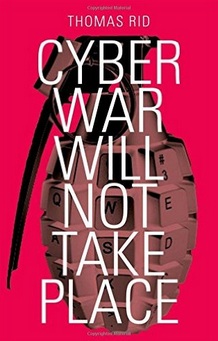
- Rid T., “Think Again: Cyber War. Don’t fear the digital bogeyman. Virtual conflict is still more hype than reality”, Foreign Policy, March/April 2012.
- Shmuel Even and David Siman-Tov, “Cyber Warfare: Concepts and Strategic Trends Memorandum No. 117 May 2012”, Institute for National Security Studies Tel Aviv.
- Alberts David S., Garstka John J., Hayes Richard E., Signori David A., “Understanding Information Age Warfare, Chris C. Demchak and Peter Dombrowski Rise of a Cybered Westphalian Age”, Strategic Studies Quarterly 5, no. 1 (Spring 2011): 32-61.
- Dmytryszyn Mark C., “What is Required For An Offensive Cyberspace Operation To Be Considered Just per Traditional Just War Theory. A Persuasive Thesis on Just War Analysis Of Cyberwarfare”, Maxwell Air Force Base, Alabama March 2011.
- Parks Raymond C., Duggan David P. “Principles of Cyber-warfare United States Military Academy”, West Point, NY, 5-6 June, 2001.
- Mumford Andrew, “Proxy Warfare and the Future of Conflict”, The RUSI Journal, 158:2, pp. 40-46, April 2013.
- Cornish Paul, Livingstone David, Clemente Dave, Yorke Claire, “On Cyber Warfare”, A Chatham House Report, November 2010.
- AIV/CAVV (2011) “Cyber Warfare, nr. 77, AIV/ nr. 22, CAVV”, The Hague: Advisory Council on International Affairs.
- Deibert, R. (2013b) “Black code. Inside the battle for cyber space”, Toronto: Signal.
- Gross, M. J., “World War 3.0”. Vanity Fair, March 30, 2012.
Abbiamo circa altri 200 documenti tra articoli, saggi e volumi sul tema della cyber warfare da consigliarti! Clicca qui per mandare subito una mail e ricevere la nostra bibliografia completa.
Cyber Law, Governance and Society
monografie
- Dinniss Harrison Heather, Cyber Warfare and the Laws of War, Cambridge University Press, New York, 2012.
- Carr Nicholas, The Shllows.How the Internet is Changing the Way We Read, Think and Remember, Norton, New York, 2010.
- Carr Nicholas, The Big Switch. Rewiring the World, from Edison to Google, Norton, New York, 2009.
- Arthur Charles, Digital Wars. Apple, Google, Microsoft and the Battle for the Internet, trad. it. Digital Wars. Apple, Google, Microsoft e la battaglia per la conquista del web, Hoepli, Milano, 2012.
- AA. VV., Post-Umano. Relazione tra uomo e tecnologia nella società delle reti, a cura di Mario Pireddu e Antonio Tursi, Angelo Guerini e Associati, Milano, 2006.
- Gray Hables Chris, Cyborg Citizen. Politics in the PosthumanAge, Routledge New York, 2001.
- Jean Carlo, Tremonti Giulio, Guerre Stellari. Società ed economia nel cyberspazio, FrancoAngeli, Milano, 2000.
- Sini Carlo, L’uomo, la macchina, l’automa. Lavoro e conoscenza tra futuro prossimo e passato remoto, Bollati Boringhieri, Torino, 2009.
- Toffler Alvin, The Third Wave, New York, William Morrow and Company, 1980, trad. it, a cura di Lino Berti, La Terza Ondata, Sperling & Kupfer, Milano,1987.
- Virilio Paul, La bombe informatique, Paris, Édition Galilée, 1998, trad. it. La bomba informatica, a cura di Piana Gabriele, Raffaello Cortina Editore, Milano, 2000.
- Deibert, R., J. Palfrey, R. Rohozinski en J. Zittrain (2010, eds.) Access controlled: The shaping of power, rights, and rule in cyberspace, Cambridge (Mass.): MIT Press.
- Mueller, M. (2010) Networks and states. The global politics of internet governance, Cambridge (Mass.): MIT Press.
- Mueller, M. and B. Kuerbis (2014) ‘Towards global internet governance: How to end U.S. control of ICANN without sacrificing stability, freedom or accountability’, TPRC Conference Paper, available at SSRN: http://ssrn.com/abstract=2408226.
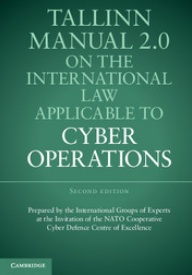
- Schmitt, M. (2013, ed.) Talinn Manual on the international law applicable to Cyber Warfare, Cambridge: Cambridge University Press.
- Graham, M. (2014) ‘Internet geographies: Data shadows and digital divisions of labour’, pp.99-116 in M. Graham en W. Dutton (eds.) Society and the internet: How networks of information and communication are changing our lives, Oxford: Oxford University Press.
Articoli e Saggi
- Mele S., “Cyberweapons. Aspetti giuridici e strategici. Versione 2.0”, Istituto Italiano di Studi Strategici Niccolò Machiavelli, Roma, giugno 2013.
- Vinge Vernor, “The Coming Technological Singularity: How to Survive in the Post- Human Era”, VISION-21 Symposium, NASA Lewis Research Center and the Ohio Aerospace Institute, March 30-31, 1993.
- Westby Jody R., “Wegener Henning, Barletta William, Rights and Responsibilities in Cyberspace Balancing the Need for Security and Liberty”, EastWest Institute & World Federation of Scientists, New York, 2010.
- Heinegg von Wolff Heintschel, “Legal Implications of Territorial Sovereignty in Cyberspace”, NATO CCD COE Publications,Tallinn, 2012.
- European Union Institute for Security Studies, “Global Trends 2030 –Citizens in an Interconnected and Polycentric World”, Paris, 2011.
- O’Neil Michael, “Cyber Crime Dilemma: Is Possible to Guarantee Both Security and Privacy?”, The Brookings Review, Vol. 19, No. 1 (Winter, 2001), pp. 28-31.
- Benkler, Y. (2011) ‘A free irresponsible press: Wikileaks and the battle over the soul of the networked fourth estate’, Harvard Civil Rights-Civil Liberties Law Review, 46 (2): 311-396.
- Brown, I. and C. Marsden (2013) “Regulating code: Good governance and better regulation in the information age”, Cambridge (Mass.): MIT Press.
- Eeten, M. van, M. Mueller and N. van Eijk (2014) “The internet and the state: A survey of key developments”, Den Haag: Raad voor Maatschappelijke Ontwikkeling.
- Eeten, M. van, M. Mueller and N. van Eijk (2014) “The internet and the state: A survey of key developments”, Den Haag: Raad voor Maatschappelijke Ontwikkeling.
Abbiamo circa altri 250 documenti tra articoli, saggi e volumi sul tema della Governance globale e Diritto internazionale da consigliarti! Clicca qui per mandare subito una mail e ricevere la nostra bibliografia completa.
information warfare
- Umberto Gori, Serena Lisi (a cura di), Cyber Warfare 2014: Armi cibernetiche, sicurezza nazionale e difesa del business. Collana “Scienza politica e Relazioni internazionali”, Franco Angeli editore. 2015.
- Umberto Gori, Serena Lisi (a cura di), Information Warfare 2013: La protezione cibernetica delle infrastrutture nazionali. Collana “Scienza politica e Relazioni internazionali”, Franco Angeli editore. 2014.
- Umberto Gori, Serena Lisi (a cura di), Information Warfare 2012: Armi cibernetiche e processo decisionale. Collana “Scienza politica e Relazioni internazionali”, Franco Angeli editore. 2013.
- Umberto Gori, Luigi Sergio Germani (a cura di), Information Warfare 2011: La sfida della Cyber Intelligence al sistema Italia: dalla sicurezza delle imprese alla sicurezza nazionale. Collana “Scienza politica e Relazioni internazionali”, Franco Angeli editore. 2012.
- Umberto Gori, Luigi Sergio Germani (a cura di), Information Warfare 2010: Le nuove minacce provenienti dal cyberspazio alla sicurezza nazionale italiana. Franco Angeli editore, 2011.
Abbiamo circa altri 50 documenti tra articoli, saggi e volumi sul tema dell’information warfare da consigliarti! Clicca qui per mandare subito una mail e ricevere la nostra bibliografia completa.